While many people chew gum for enjoyment or to help with bad breath, there is a lot more going on behind the scenes. Chewing gum has been around for thousands of years in different shapes and forms. The key to its longevity is its composition, which encourages endless chewing. Through chewing, the blood vessels surrounding vital nerves widen, causing a sort of neural overdrive where the body is able to take in more sensory input. The nerves carry the information to the brain where it is processed. Moreover, by increasing blood flow to primary memory organs, chewing gum improves memory and alertness, while reducing anxiety.
Introduction
As a mathematics major, my semesters are packed with countless exams and quizzes. I spend the majority of my time at my desk working through practice problems and memorizing formulas. Since these tests determine my grades, I do whatever I can to achieve the best results possible. Through years of studying, I have picked up a few tricks, and I have found one that would surprise most people- chewing gum. Though often overlooked, this simple habit reveals how a mechanical action can boost mental performance in three key ways: improving memory, increasing alertness, and reducing anxiety.
History of Chewing Gum
In 77 AD, Pliny the Elder wrote in Historia Naturalis about a plant substance named mastich, from the word mastication (the process of chewing), which was chewed by the ancient Greeks [1]. Even before that, 9,000 years ago, northern Europeans chewed tar from birch trees, and Mayans and Aztecs chewed chicle from the sapodilla tree [2]. Even then, there were diverse uses: Mayans cooked the chicle into cha to suppress their appetite, while Aztecs used it as a breath freshener [1]. Oddly enough, despite the benefits, social acceptance of the act depended on the person chewing chicle and their location [1]. Because of the Aztecs’ strict gender roles, men and married women were judged if caught chewing gum in public [1]. Society questioned men’s manhood and labeled married women as harlots [1]. Thus, with a social stigma on chewing, there was little to no public use of chicle, stagnating common use . However, gum development exploded once again thanks to three American entrepreneurs: John Curtis, Thomas Adams, and William Wrigley Jr.
Inspired by the Native Americans, John Curtis opened the first US chewing gum factory in the early 1850s, where he cooked spruce tree resin and covered it with cornstarch to create the first commercial chewing gum called the State of Maine Pure Spruce Gum [2]. However, his goldmine would soon take a turn in the mid-1850s when Antonio López de Santa Anna, an expatriate and former Mexican president, introduced chicle to Thomas Adams, an inventor in New York [2]. Chicle is a latex sap excreted from cuts in sapodilla tree bark to seal the wounds [1]. With chicle emerging as a new, cheap alternative to rubber, the partnership hoped to make a fortune [1]. Unfortunately, the rubber idea crashed and burned; however, motivated by Santa Anna’s own chewing of chicle, Adams began to boil and roll the chicle into a chewing gum [1,2]. Taking off like a rocket, Adams’s new creation, Chiclets, “produced five tons of chewing gum daily” until synthetic ingredients took its place in the mid 1900s [1,2]. With Chiclets glittering like gold, many businessmen flocked to the light.
One of them was William Wrigley Jr, founder of the Wrigley Gum company. Before he entered the world of chewing gum, Wrigley began as a soap salesman [2]. He succeeded as a businessman because he often bundled products like baking powder with every soap purchase to entice customers[2]. When the baking powder overtook his soap, he advertised baking soda and bundled his orders with free packs of chewing gum [2]. Chewing gum was new to the market, so he used it as a compelling premium to help sell his baking powder. With its success, he quickly climbed the ranks of entrepreneurs and left a profound impact by creating today’s top brands: Wrigley’s Spearmint, 5 Gum, and Juicy Fruit.
Rollercoaster of Popularity
Thanks to the aforementioned chewing gum pioneers, chewing gum triumphed in the market in the 19th and 20th centuries as a fun, breath-freshening habit [2].
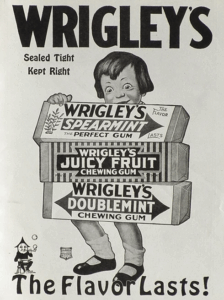
Figure 1 Example of 1919 Wrigley’s marketing (Image from [39])
However, the popularity of chewing gum has not always been on the incline. In 1914, Listerine, a popular oral rinse brand, began convincing people that halitosis, bad breath, was ruining their lives [3]. This advertisement shifted consumers towards oral rinses, but chewing gum was still the bigger product. In 2020, during the pandemic, popularity plummeted as fewer people interacted with one another and bad breath became less of a worry, as shown in the chart below [4]. People also went into stores less frequently, which caused around a 38% decrease in money spent on impulsive checkout counter purchases like chewing gum [4]. With producers losing a chunk of their market, they began looking for a new demographic. However, generational trends demonstrated that newer generations, such as Generation Alpha (born after 2010), chew less gum because gum companies have lost their innovation [5]. With more creative companies on the market like Haribo, Hershey, and Skittles, the new age of consumers spends less money on gum as it is not as enticing as other products [5]. Whether it is usefulness or consumer preferences, chewing gum manufacturers had to pull the ace out of their sleeves to revitalize their product.
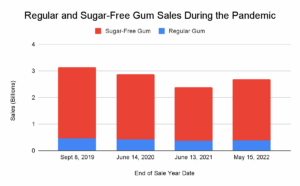
Figure 2 Pandemic Effect on Gum Sales (Data from [6])
Alyona Fedorchenko, Vice President of Mars’ snacking division, found the hidden ace after talking with a nurse who chews gum on the job [5]. The secret is that gum can be used as a cognitive aid and help mitigate stress. During the pandemic, no job was more demanding and important than those of healthcare workers, so if a simple trick like chewing gum can support someone in the nurse’s position, the benefits should be widespread. Marketing teams took advantage of this insight and transitioned gum advertisement from an enjoyable breath freshener to a cognitive aid. With this change, a 9.8% compounded annual growth rate is predicted for the next ten years [7]. While advertisements sometimes exaggerate a product’s benefits, science gives the cold, hard facts. Thus, to understand the product, it is necessary to look under the microscope at its composition.
Makeup of Chewing Gum
The most distinct feature of chewing gum is its flavor. However, the flavor has little to do with cognitive function compared to the gum base. Most gum bases are composed of resin, wax, and elastomers, which help with chewiness, softness, and elasticity [8]. This combination gives us the ability to keep chewing. Thus, the gum base is the star player in mental acuity, while the artificial sweeteners are mostly just pleasant add-ons. One exception is an increasingly utilized sweetener, xylitol [9]. Unlike sugar, xylitol doesn’t feed the harmful bacteria in the mouth,improving the overall health of your gums [9]. This benefit holds a hidden link to cognitive function, because deteriorating gum leads to overproduction of stress hormones, harming the hippocampus [10]. With xylitol introducing the link between chewing and mental acuity, it is time to investigate the prominence of the connection.
The inside link between chewing and cognitive function
First is mastication, the engine powering the process. Breaking down the gum activates countless motor fibers in the jaw [11]. This activation changes two key components, nerves and blood vessels, each enhancing cognitive function in a unique way.
The mastermind behind the mindless action of mastication is the trigeminal nerve, the main sensory nerve in the face. One role of this nerve is to control the motor fibers involved in chewing [12]. With each bite of the gum, more motor fibers are used, increasingly engaging the nerve.
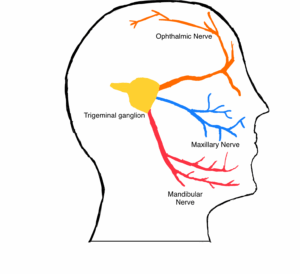
Figure 3 Overview of the Trigeminal Nerve
Moreover, the trigeminal nerve carries taste, pain, and temperature information from the mouth to the brain [13]. In fact, this nerve is so essential for the transfer of information that trigeminal neuralgia, a chronic pain disorder affecting the trigeminal nerve, can serve as an early indicator that patients are prone to dementia and cognitive decline [14]. Typically, the root cause of the disorder is an artery or vein compressing the trigeminal nerve [12]. It is also important to note that people who chew gum have more active trigeminal nerves than non-chewers [15]. Although increased activity does not directly reduce susceptibility to trigeminal neuralgia, chewing gum strengthens jaw muscles and acts as a distraction to pain caused by the disorder [15]. This jaw exercise not only helps the nerves but also the blood vessels.
The act of chewing activates motor fibers, leading to greater vasodilation, or widening of blood vessels. While sounding simple, its byproducts do not go unnoticed. Widening the channel increases blood flow, which decreases pressure on the nerves and increases oxygen levels [16]. In addition, the increased blood flow makes its way up to the brain, improving the cerebral brain flow (CBF), heightening the activity of vital brain organs like the thalamus. This organ acts as a gatekeeper for messages between the brain and the rest of the body, as well as processing sensory information like hearing, taste, sight, and touch [17, 18]. Despite different functions, nerves and blood vessels often work together.
Nerves and Blood Vessels Help with Memory Creation
Exemplifying their teamwork, nerves, and blood vessels improves the creation of memories. Chewing gum puts nerves into overdrive to collect more information and increases CBF. With these performance enhancers, the thalamus, cerebral cortex, and hippocampus become more active and efficient [19]. With more oxygen-rich blood, the thalamus can sift through the enormous amount of the nerves’ information. After passing through the thalamus, the information is relayed to the cerebral cortex, a temporary storage container [17]. The cerebral cortex interprets the new information and decides what information to further relay to the hippocampus [18]. Finally, the hippocampus forms new memories by ingraining the new information to be stored in new clusters of neurons [18]. However, new memories are only beneficial if they are recountable. Thankfully, chewing gum can help with this problem, too.
Recalling memories
Memory is the reactivation of a group of neurons, a type of brain cell. Thus, it all starts with neurogenesis, or the birth of neurons in the brain. Neurogenesis takes place in the subventricular zone (SVZ) located in the lateral ventricles, large empty spaces near the hippocampus, and the subgranular zone (SGZ) located in the hippocampus [20]. You can think of these locations as the delivery room of the brain. The creation of new neurons helps the brain learn and retain information, making neurogenesis incredibly important to brain function. This is where chewing gum becomes important: the increased blood flow in the trigeminal nerve from chewing can increase blood flow in the optic and auditory nerves, due to their close proximity [21]. Thus, chewing increases the amount of information carried to the brain through the nerves, and the additional oxygen supports the growth of neuron networks through neurogenesis. Moreover, the sensory information gained from chewing gum, like the taste or aroma, can be used later to better recall memories by simulating earlier conditions.
Additionally, neurons create new synapses through a process called synaptogenesis, which allows the neurons to form new connections with each other, forming a kind of spider web [22]. Despite being much smaller, synapses are the key component in the webs connecting the network of neurons. An example to illustrate this point is a multiplication fact sheet.
The first time a specific multiplication problem is done, synapses are formed. The next time one is done, it can be done faster, as you have learned from the previous problem and synapses have been created. Over time, this synapse network grows, allowing multiplication problems to be done with speed and ease. In addition, Synapses have a unique characteristic called synaptic plasticity, where webs grow weaker or stronger depending on recent activity between neurons, affecting the ability to recall information [24]. For example, I can close my eyes and describe the layout of my current home because my recent experience leads to strong synapses. However, if I were instead asked to describe my childhood room, I could not say more than the color of the wall because the synapses are far weaker.

Figure 4 How Synaptic Plasticity Affects Memory [24]
Nevertheless, it is much more complicated as there are around 86 billion neurons with around 100 trillion connections [25]. The sheer amount of neurons and connections is necessary because individual neurons do not hold information. Instead, it is a network of neurons that pass signals from one to another through synapses that retain information.
Whether it is the act of chewing, the ignition of nerves and blood vessels, or increased brain activity, each uniquely links chewing gum to increased cognitive function. Thus, with science backing the hypothesis of chewing gum improving mental acuity, it is time to identify the real-world benefits.
The Three Benefits of Chewing Gum
A. Memory
Chewing gum improves both short-term and long-term memory [26]. In a series of immediate and delayed word recall tests, participants who chewed gum were able to recall more words in comparison to the control group [26]. Important to note, there was less of a significant difference in the delayed word recall test, as, much like the flavor of gum, the effects of chewing gum are time-limited [27]. This drawback was noticed during testing, where gum chewers performed better for the first 20 minutes, yet afterwards they tested the same as the control group [27]. Researchers accredited mastication-based arousal i.e., the heightened focus after starting to chew [27]. Moreover, there is also no hope in faking it until you make it with gum, as participants who mimicked chewing gum showed no improvement [26]. This is because of two components: the saliva and the sensory information. When you chew gum, the saliva created to help break down the gum improves blood flow in the head, primarily to regions involved in memory function [26]. But that’s not all biting into the gum can do.
B. Alertness
Chewing gum also sounds the body’s alarms, and increased alertness leads to retention and endurance benefits. Without paying proper attention, it does not matter whether the memory effects are significant or not. Illustrating this claim, the Alice Heim test displayed that higher alertness is associated with better retention of important information, like the themes of a story, whereas useless information is recalled when alertness is low [19]. Moreover, chewing gum can increase endurance. The most unproductive and error-filled part of the workday comes towards the end when everyone is ready to go home [28]. After incorporating gum into their work life, workers reported reduced fatigue during the day [28]. Taken as common sense, when workers feel more awake, they typically perform better. This continued on in the next study, where chewing gum improved productivity, decreased errors, and led to more energy in the morning [28]. Thus, chewing gum enhances worker performance. However, excessive alertness, known as hypervigilance, is also a possibility, leading to anxiety.
C. Anxiety
As all students know, after all the studying, the inevitable day of a test marked on our calendar appears and plagues us with jitters and despair. Here is where chewing gum comes in. The rhythmic chewing of gum calms participants as it lowers the amount of stress hormones [29]. Despite the trick being so small, not everyone takes advantage. For the same reason for music, daily routines, or even the human heartbeat, humans need rhythm. With so many students, the streets of USC turn into traffic jams. All it takes is one look around to notice that almost everyone has an earbud in. Music grounds them in the chaos. Chewing gum has the same calming effect. For example, in a study of 100 final year nursing students, results showed that mental issues such as depression, anxiety, and stress were lower in the gum chewing groups [10]. When under pressure, it is the calm minds that prevail among all others. This is true in a variety of situations, whether it is a test in school, the Super Bowl, or an elder doing everyday tasks.
Looking to the future
A. Limitations
Nevertheless, chewing gum has side effects such as jaw pain or cavities [30]. Moreover, no matter how much a person chews, the benefits are not guaranteed. Like many medications or supplements, there have been several participants who did not see any difference when chewing gum. Furthermore, the benefits of chewing are circumstantial. While chewing gum may improve focus on a particular subject, the more tasks done simultaneously i.e, more divided attention, the less beneficial the gum might be [27]. Nevertheless, results in a few can lead to placebo effects in others. For example, in a test to measure concentration effects, the scores indicated no significant change in concentration levels; however, in the self-assessment, the gum chewing group claimed they could focus better [31]. Thus, even if gum is limited in its effects, the potential benefits are still in reach.
B. The Optimal Formula
As a chewing gum connoisseur, I pondered how I can take full advantage of chewing gum’s benefits. For optimal results, a participant should chew sugar-free gum sweetened with xylitol while undividedly studying one subject and then again during the test, if possible [27, 29]. If not, I would recommend chewing gum just before the test again as the close time proximity will trigger memories from the long hours studying. I would not recommend chewing gum for the whole study session to avoid excess side effects. The occasional chewing motion, taste, and aroma of the minty or other flavored sweet treat can spike energy levels. Unfortunately, we cannot operate at max level all the time, but the increased alertness and decreased stress will set a participant up for future success.
C. Future Products
The timeline of chewing gum from 77 AD to the present day underscores its unique utility, from breath freshness to cognitive aid. However, it is the future of gum that shines the brightest. Not only will technology eliminate the environmental effects of gum through biodegradable compounds, but chewing gum can also become the newest medicinal delivery system. Products like Neuro Gum, which will only grow with research, have pioneered the way of infusing more positive supplements like caffeine into gum in the last decade. Soon, the numerous pills and powders of supplements and medicines will be transformed into a small, delicious treat to chew on. Infused chewing gum has the potential to turn a chronic disorder like trigeminal neuralgia into an acute disease.
Conclusion
Chewing gum is a product we are all familiar with, but haven’t unlocked the true potential of. Not only can it help with productivity and anxiety, but there is still much to be discovered and invented in the world of chewing gum.
Further Reading Links:
- https://pmc.ncbi.nlm.nih.gov/articles/PMC4468459/
- https://penntoday.upenn.edu/news/chewing-curb-covid
- https://www.sciencedirect.com/science/article/pii/S2666833521000447
Suggestions or links for multimedia applications:
- https://youtu.be/n6Oqlb7wrKk?feature=shared
- https://youtu.be/0dViu8lAQN0?feature=shared
- https://www.npr.org/player/embed/106439600/106521662
- https://youtu.be/T48ZHsfLHQA?feature=shared
References
[1] A. Fiegl, “A Brief History of Chewing Gum,” Smithsonian, Jun. 16, 2009. https://www.smithsonianmag.com/arts-culture/a-brief-history-of-chewing-gum-61020195/
[2] E. Nix, “Chew on This: The History of Gum,” HISTORY, Aug. 23, 2018. https://www.history.com/news/chew-on-this-the-history-of-gum
[3] “A Brief History of Mint, from Air Freshener to Breath Freshener,” Vox Creative. https://next.voxcreative.com/sponsored/10709952/a-brief-history-of-mint-from-air-freshener-to-breath-freshener
[4] L. Pritchett, “Chewing Gum Sales Are Plummeting – Here’s Why,” Plant Based News, Mar. 25, 2024. https://plantbasednews.org/lifestyle/food/chewing-gum-sales/
[5] D. Durbin, “What will make Americans start chewing gum again? Candy companies want to know,” AP News, Mar. 07, 2024. https://apnews.com/article/gum-chewing-popularity-mars-wrigley-ac8251d03c5248d3716988fe144d2333
[6] A, Thompson, “State of the Industry 2022: Gum category begins to bounce back after COVID challenges | Snack Food & Wholesale Bakery,” www.snackandbakery.com. https://www.snackandbakery.com/articles/103226-state-of-the-industry-2022-gum-category-begins-to-bounce-back-after-covid-challenges
[7] N.R. Choudhury, “Functional Chewing Gum Market,” www.futuremarketinsights.com. https://www.futuremarketinsights.com/reports/functional-chewing-gum-market
[8] K. Pandolfi, “The History of Chewing Gum, From Chicle to Chiclets,” Serious Eats, 2017. https://www.seriouseats.com/chewing-gum-history-how-its-made
[9] K. Gunnars, “Xylitol: Everything You Need to Know,” Healthline, Oct. 04, 2018. https://www.healthline.com/nutrition/xylitol-101#bottom-line
[10] C. Collins, “Can chewing help manage stress, pain and appetite? Here’s what the science says,” The University of Newcastle, Australia, Feb. 07, 2023. https://www.newcastle.edu.au/hippocampus/story/2023/can-chewing-help-manage-stress
[11] H. Jung, Na Kyung Hwangbo, Y. Park, and H. Ahn, “Effects of gum chewing training on occlusal force, masseter muscle thickness and mandibular shape: A randomised controlled clinical trial,” Journal of Oral Rehabilitation, Aug. 2024, doi: https://doi.org/10.1111/joor.13830.
[12] P. Mehta, “Trigeminal Nerve: What to Know,” WebMD, Dec. 21, 2024. https://www.webmd.com/brain/trigeminal-nerve-what-to-know
[13] T. Huff and D. T. Daly, “Neuroanatomy, Cranial Nerve 5 (Trigeminal),” Nih.gov, Apr. 08, 2019. https://www.ncbi.nlm.nih.gov/books/NBK482283/
[14] Y.-H. Cheng, C.-H. Wu, W.-T. Wang, Y.-Y. Lu, and M.-K. Wu, “Trigeminal Neuralgia Is a Dementia Risk Factor: A Retrospective Cohort Study,” vol. 19, no. 10, pp. 6073–6073, May 2022, doi: https://doi.org/10.3390/ijerph19106073.
[15] P. Han, M. Penzler, W. Jonathan, and T. Hummel, “Frequent minty chewing gum use is associated with increased trigeminal sensitivity: An fMRI study,” Brain Research, vol. 1730, p. 146663, Jan. 2020, doi: https://doi.org/10.1016/j.brainres.2020.146663.
[16] R. Ramanlal and V. Gupta, “Physiology, Vasodilation,” PubMed, Jan. 23, 2023. https://www.ncbi.nlm.nih.gov/books/NBK557562/
[17] Mayo Clinic, “How your brain works,” Mayo Clinic, Mar. 02, 2024. https://www.mayoclinic.org/diseases-conditions/epilepsy/in-depth/brain/art-20546821
[18] Cleveland Clinic, “What Is the Limbic System?,” Cleveland Clinic, Apr. 06, 2024. https://my.clevelandclinic.org/health/body/limbic-system
[19] A. Smith, “Effects of chewing gum on mood, learning, memory and performance of an intelligence test,” Nutritional neuroscience, vol. 12, no. 2, pp. 81–8, 2009, doi: https://doi.org/10.1179/147683009X423247.
[20] G. Ming and H. Song, “Adult Neurogenesis in the Mammalian Brain: Significant Answers and Significant Questions,” Neuron, vol. 70, no. 4, pp. 687–702, May 2011, doi: https://doi.org/10.1016/j.neuron.2011.05.001.
[21] H. Chen, M. Iinuma, M. Onozuka, and K.-Y . Kubo, “Chewing Maintains Hippocampus-Dependent Cognitive Function,” International Journal of Medical Sciences, vol. 12, no. 6, pp. 502–509, 2015, doi: https://doi.org/10.7150/ijms.11911.
[22] G. L. Estrin and S. Bhavnani, “Brain Development: Structure,” ScienceDirect, Jan. 01, 2020. https://www.sciencedirect.com/science/article/pii/B9780128093245237760
[24] “How are memories formed?,” Uq.edu.au, Dec. 02, 2016. https://qbi.uq.edu.au/memory/how-are-memories-formed
[25] C. Caruso, “A New Field of Neuroscience Aims to Map Connections in the Brain,” hms.harvard.edu, Jan. 19, 2023. https://hms.harvard.edu/news/new-field-neuroscience-aims-map-connections-brain
[26] L. Wilkinson, A. Scholey, and K. Wesnes, “Chewing gum selectively improves aspects of memory in healthy volunteers,” Appetite, vol. 38, no. 3, pp. 235–236, Jun. 2002, doi: https://doi.org/10.1006/appe.2002.0473.
[27] S. V. Onyper, T. L. Carr, J. S. Farrar, and B. R. Floyd, “Cognitive advantages of chewing gum. Now you see them, now you don’t,” Appetite, vol. 57, no. 2, pp. 321–328, Oct. 2011, doi: https://doi.org/10.1016/j.appet.2011.05.313.
[28] A. P. Allen and A. P. Smith, “Chewing Gum: Cognitive Performance, Mood, Well-Being, and Associated Physiology,” BioMed Research International, vol. 2015, no. PMC4449949, pp. 1–16, May 2015, doi: https://doi.org/10.1155/2015/654806.
[29] “BITS & PIECES – WHAT TO KNOW ABOUT CHEWING GUM,” Parkinson’s Resource Organization, May 31, 2020. https://www.parkinsonsresource.org/news/articles/bits-and-pieces-what-to-know-about-chewing-gum/
[30] A. Emamzadeh,“To Chew or Not to Chew Gum (When Studying)?,” Psychology Today, 2019. https://www.psychologytoday.com/us/blog/finding-a-new-home/201905/to-chew-or-not-to-chew-gum-when-studying
[31] M. G. Davidson, “Herbal-caffeinated chewing gum, but not bubble gum, improves aspects of memory,” Appetite, vol. 57, no. 1, pp. 303–307, Aug. 2011, doi: https://doi.org/10.1016/j.appet.2011.04.019.
[32]1919 Wrigley’s Gum Ad ~ Child Holds Large Gum Packs. 1919. Accessed: Nov. 06, 2025. [Online]. Available: https://www.atticpaper.com/proddetail.php?prod=1919-wrigleys-gum-ad-child-holds-large-gum